
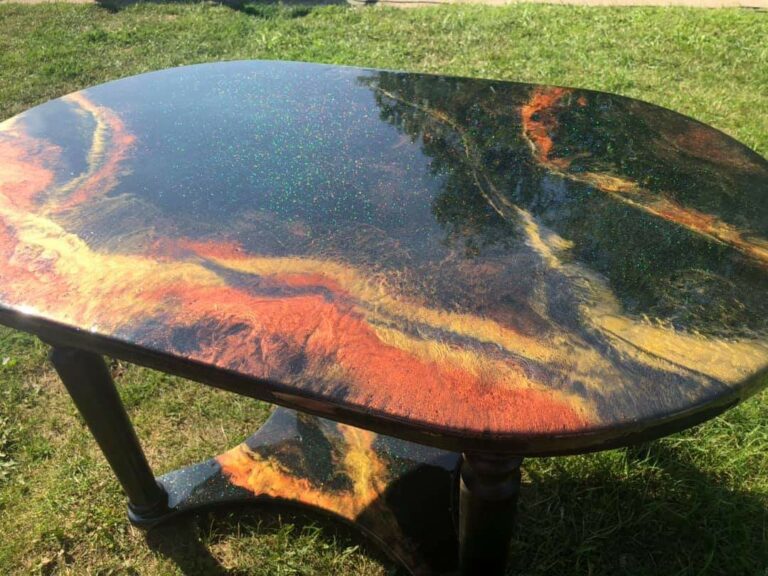
Because of their distinct adaptability and beauty, epoxy resin tables have become in recent years. These tables are created by blending epoxy resin with diverse materials like metal, glass, or wood to produce amazing pieces of furniture.
The ability of an epoxy resin table to provide a fascinating aesthetic impact is among the key reasons it has become so prevalent. The translucent nature of the resin enables virtually limitless pattern and colour combinations. From vibrant swirls and abstract designs to elegant marbling effects, epoxy resin tables can be customised to suit any style or preference.
Equipment and Materials Needed to Construct an Epoxy Resin Table
Several necessary supplies and tools are required to create an effective and visually beautiful epoxy resin table. Let’s have a look at everything you’ll need:
- Epoxy Resin: The major component utilised to achieve the shiny, long-lasting surface on your table is epoxy resin. It is typically a two-part system that consists of resin and hardener.
- Release Agent: Using a release agent on your mould or form prevents the epoxy resin from adhering to it during the curing procedure.
- Wooden Table Top: Use a high-quality timber table top as the foundation for your epoxy resin project. Check that it is level, smooth, and devoid of flaws or faults.
- Hardener: The hardener is blended with the epoxy resin to begin the curing procedure and generate a solid, strong tabletop surface.
- Mixing Containers: Use separate containers to measure and mix your epoxy resin and hardener components accurately. Graduated cups or silicone measuring cups are commonly used for this purpose.
- Heat Gun: A heat gun helps eliminate air bubbles that may form during the pouring process of epoxy resin onto your tabletop surface. It also aids in achieving an even distribution of colour pigments, if desired.
- Sandpaper: After the epoxy glue has been set, use sandpaper of varying grits to smooth out any blemishes or rough edges on the tabletop surface before adding any finishing finishes.
Making Your Own Epoxy Resin Table: A Step-by-Step Guide
- Selecting the right tabletop and preparing it for the epoxy pour.
- Using the supplier’s directions, combine the hardener and epoxy resin.
- Spread the epoxy uniformly on the table surface.
- Add any desired additives or embellishments to create unique effects.
- Eliminating bubbles with a heat gun or torch.
- Curing and drying process for achieving a strong finish.
- Sanding and polishing your epoxy resin table for a smooth surface.
- Applying a protective sealant to enhance durability and longevity.
Tips and Techniques for Achieving Stunning Effects with Epoxy Resin
Several basic supplies and equipment are required to create an epoxy resin table. Understanding the processes and tools involved may assist you in producing spectacular effects, like a marble look or building depth with layers of epoxy, whether you are a novice or an expert DIY enthusiast.
Tip #1:
To commence, you will need epoxy resin, which consists of a hardener and a resin. This combination results in a robust and long-lasting finish for your table. It’s critical to use a high-quality epoxy resin that is particularly intended for crafts.
Tip #2:
Dyes or pigments are required to produce a marble look using epoxy resin. These are added to the resin mixture to achieve different colours and patterns. Pigments can be mixed together to create unique shades or swirled together to mimic the natural beauty of marble.
Tip #3:
You will require several more pieces of equipment to apply many layers of epoxy resin and create depth in your table. To ensure a flawless finish, utilise a torch or heat gun to eliminate any air bubbles that might occur during the curing procedure. Furthermore, disposable gloves, mixing tools, and measuring cups are required for precise measurement and mixing of the epoxy components.
Tip #4:
It is important to note that when dealing with epoxy resin, safety measures must be followed because it might generate fumes during the curing procedure. Work in a well-ventilated location whenever possible, or wear proper respiratory gear.
Maintaining Your Epoxy Resin Table: Dos and Don’ts
Maintaining an epoxy resin table requires some special care to ensure its longevity and beauty. By following a few dos and don’ts, you can keep your epoxy resin table looking its best for years.
Do’s
- Regular cleaning is essential to remove any dirt or spills that may occur. Wiping down the table with a soft cloth or sponge will help prevent stains from setting in.
- Opt for mild soap and water or a gentle household cleaner specifically designed for use on resin surfaces.
- Use a non-abrasive scrub brush or sponge in combination with the mild cleaner mentioned earlier.
- Protect it from direct sunlight and extreme temperatures. Consider placing your table away from windows or using curtains or blinds to block out excessive sunlight.
Don’ts
- Avoid using abrasive cleaners or harsh chemicals. These can damage the surface of the resin and cause it to lose its shine.
- Extreme temperatures can also have detrimental effects on epoxy resin furniture. Avoid placing hot items directly on the surface of the table without using protective pads or trivets.
Wrapping Up
Your furniture may stand out if you use an epoxy resin table. You can make appealing, functional furniture out of epoxy resin and natural materials. Whether you’re a do-it-yourselfer or a professional designer, epoxy resin allows you to experiment with a wide range of patterns, colours, and textures. When making an epoxy resin table that properly represents your own style, the choices are unlimited.
 Home Designs Tips